
The Insolia Integrated Motion System™ (IMS)
Turn Faster. Accelerate Harder. Finish Stronger.
Less Work to Change Direction.
Less Load Through the Knee.
Every cut, plant, acceleration, and deceleration costs energy.
In conventional cleats, the athlete spends energy fighting the boot:
extra torque to rotate a foot pinned by studs
extra force to bend an outsole that resists in the wrong place.
IMS reduces both losses and returns the work to the athlete.
ACL Injuries Occur When Athletes Are Improperly Positioned During Deceleration or Landing
Research indicates that 70% of ACL injuries occur without direct contact, typically during sudden deceleration or a single-leg landing. Athletes are most vulnerable when their weight shifts to the back of the foot.
Mechanism of Non-Contact ACL Injury
Barry P. Boden, MD, Frances T. Sheehan, PhD
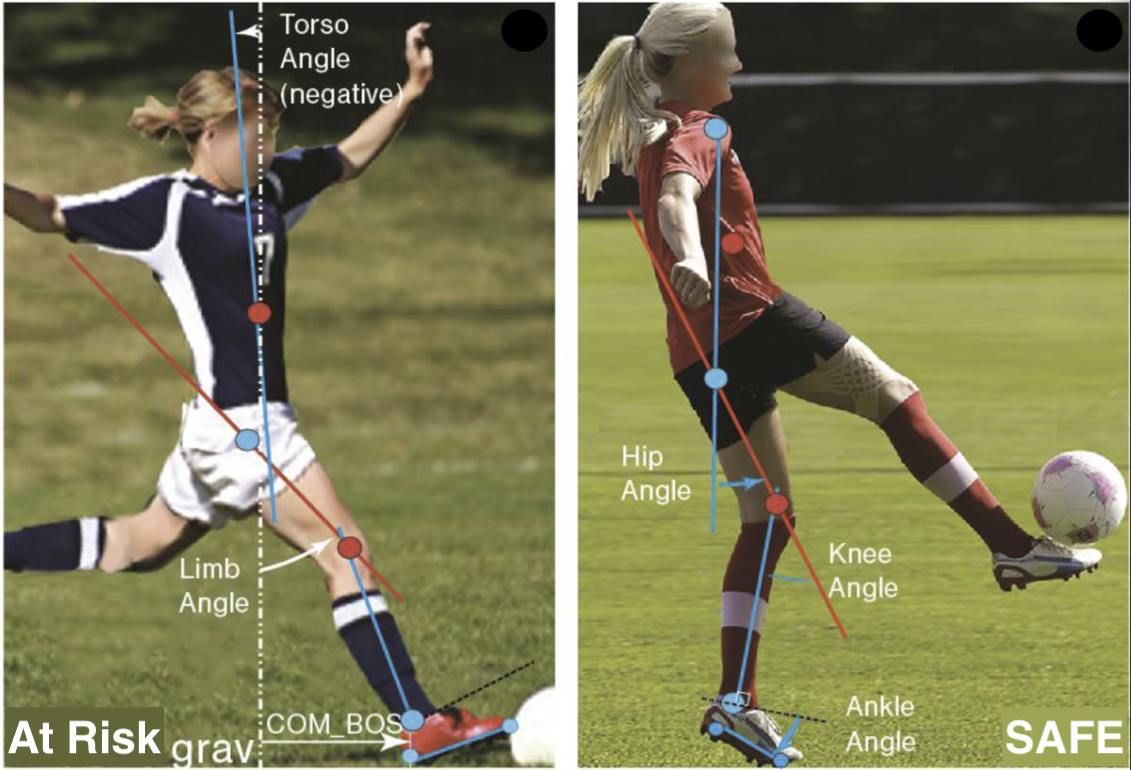
Research identifies forward weight distribution as the safe position
The at-risk position occurs when weight shifts to the back of the foot
Insolia IMS elements work together to enhance forward weight shift
The Insolia IMS Boot and Insole System
Six Innovations with Patents Issued & Allowed
Boot Innovations
1) Insolia Radial Stud Array™ (RSA)
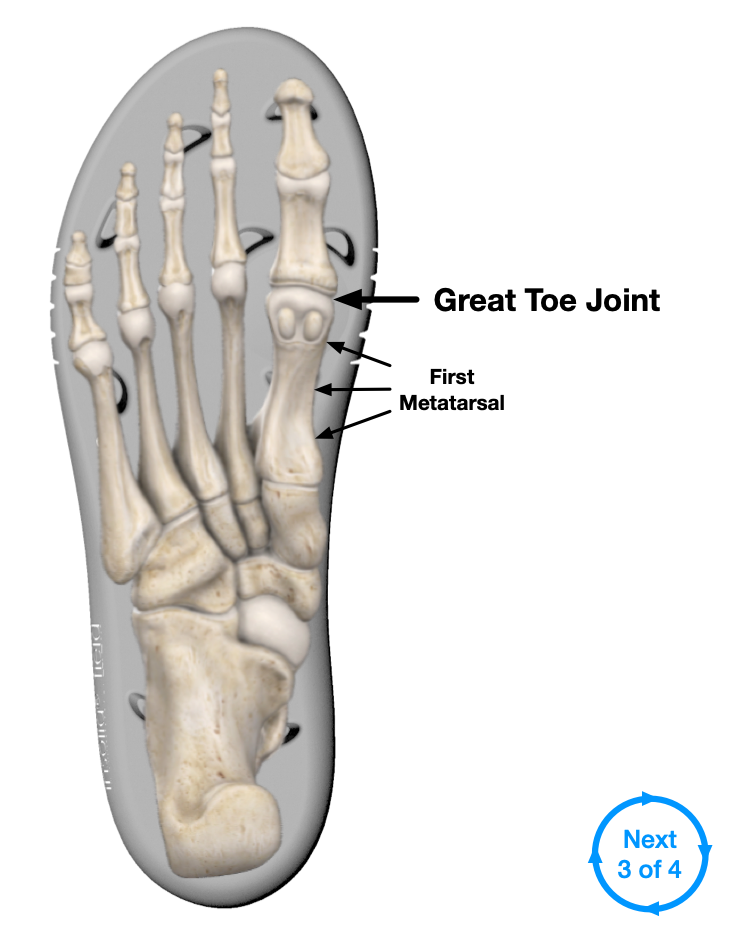
Single Center of Rotation Aligned with Great Toe Joint
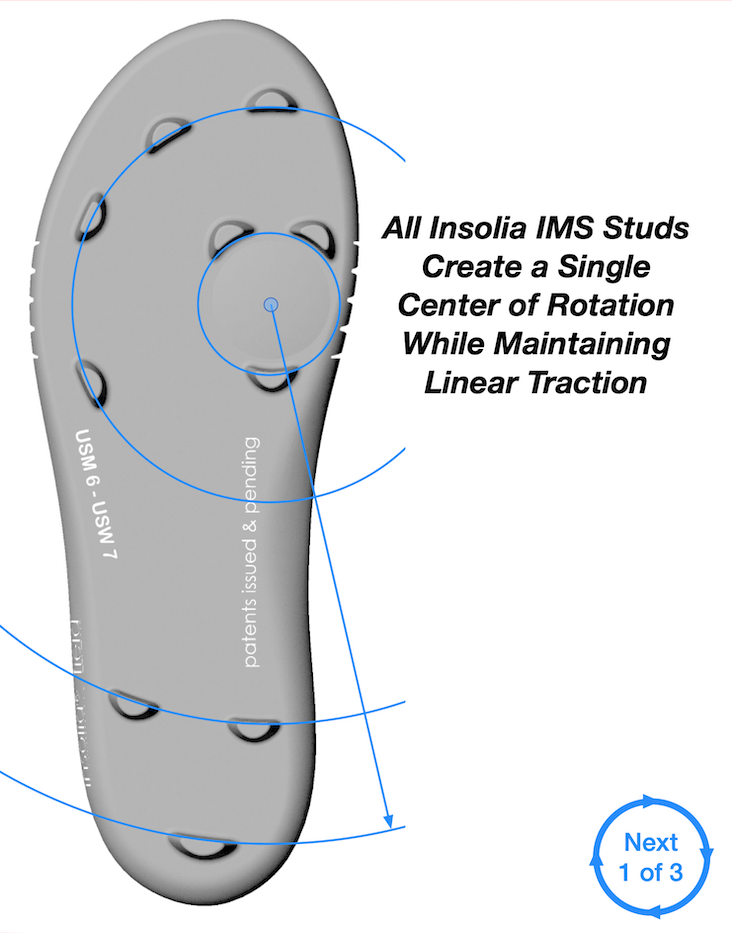
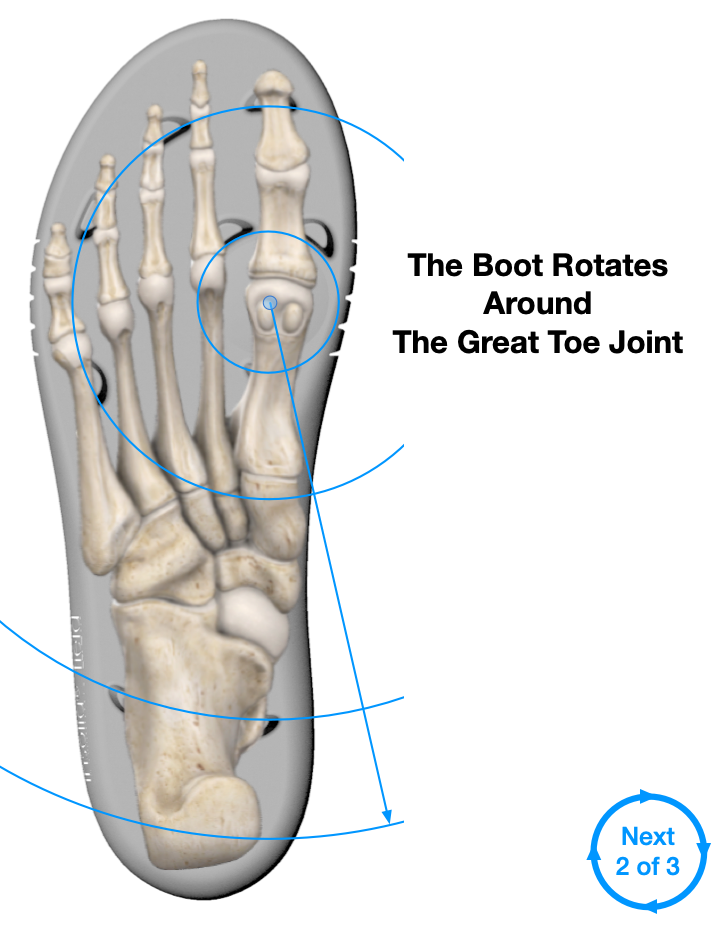
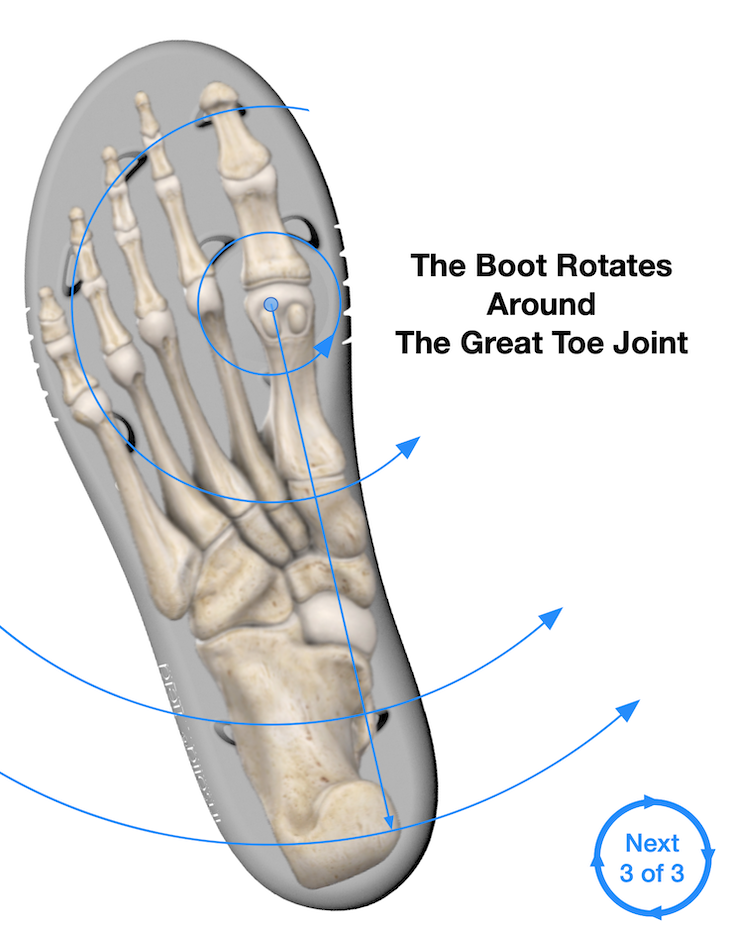
Insolia IMS Arranges Studs
Around the Great Toe Joint
Creating a Single Center of Rotation
The Insolia RSA stud pattern aligns with the foot's natural pivot point during high-force cutting maneuvers. Each stud's curvature matches its radial position from this center.
Benefits:
23% less torque to rotate the boot
The athlete turns the foot, not the groundLinear traction unchanged
No speed penalty for the reductionLower rotational load transmitted to the knee
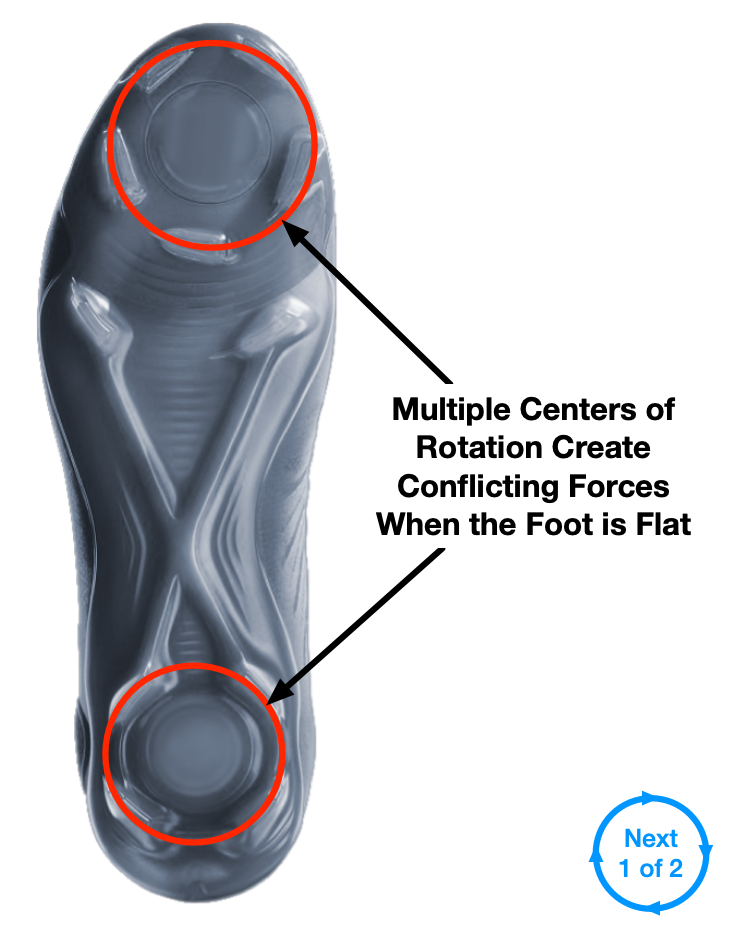
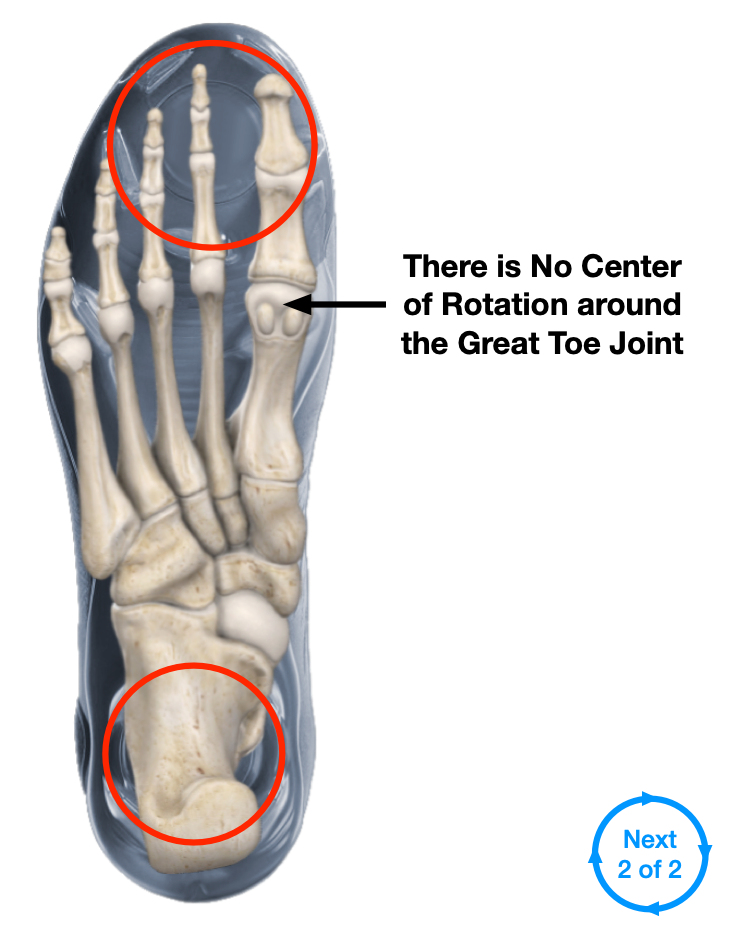
Why Existing Boots Do Not Rotate Around the Great Toe Joint
Conventional boots have no designed center of rotation. Studs are distributed across the outsole, so the foot pivots against whichever studs happen to be loaded. Rotation resistance varies with foot position and is highest when the whole foot is on the ground.
Designs that isolate rotation zones create competing centers. A boot with separate forefoot and heel rotation zones has two centers that engage independently: either on the toes, or on the heel with the toes clear. With the whole foot loaded, the two centers work against each other and neither releases.
High-force cutting is flat-footed. Both approaches lose their rotational advantage in the one condition where it matters.
The Insolia RSA establishes a single center of rotation at the Great Toe Joint, aligned with the foot’s own center of rotation.
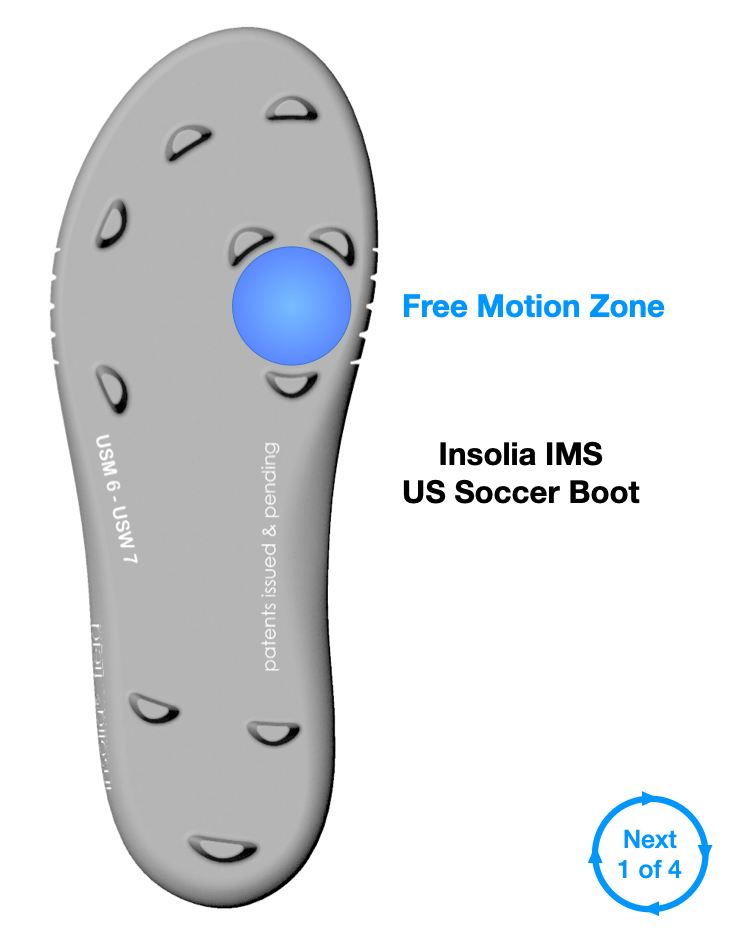
2) Insolia Free Motion Zone™ (FMZ)
The First Metatarsal Moves Freely Under Load
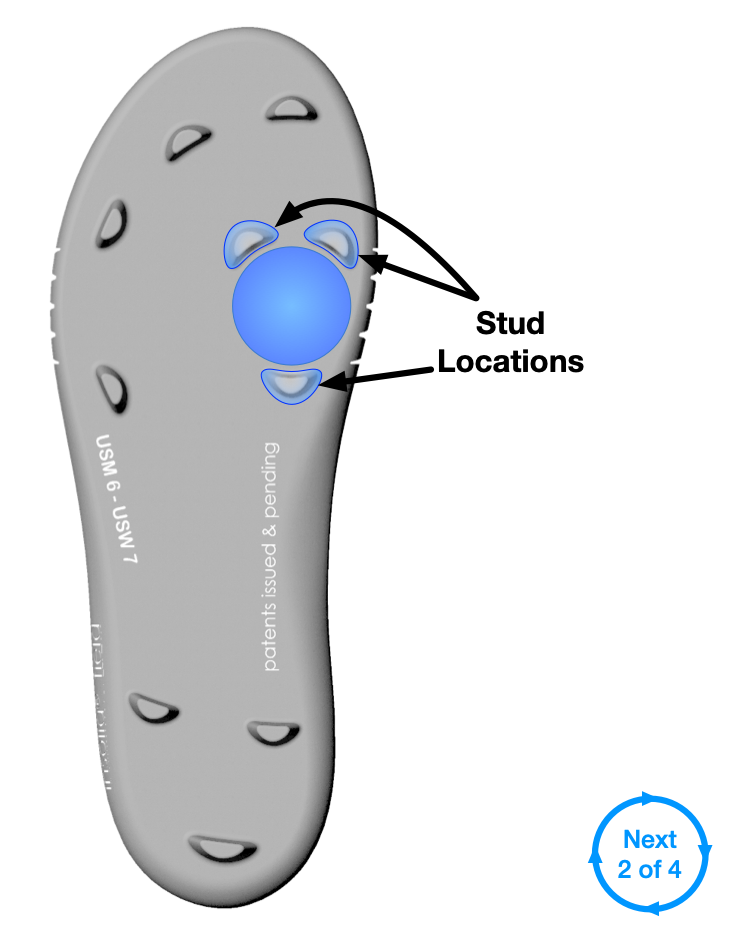
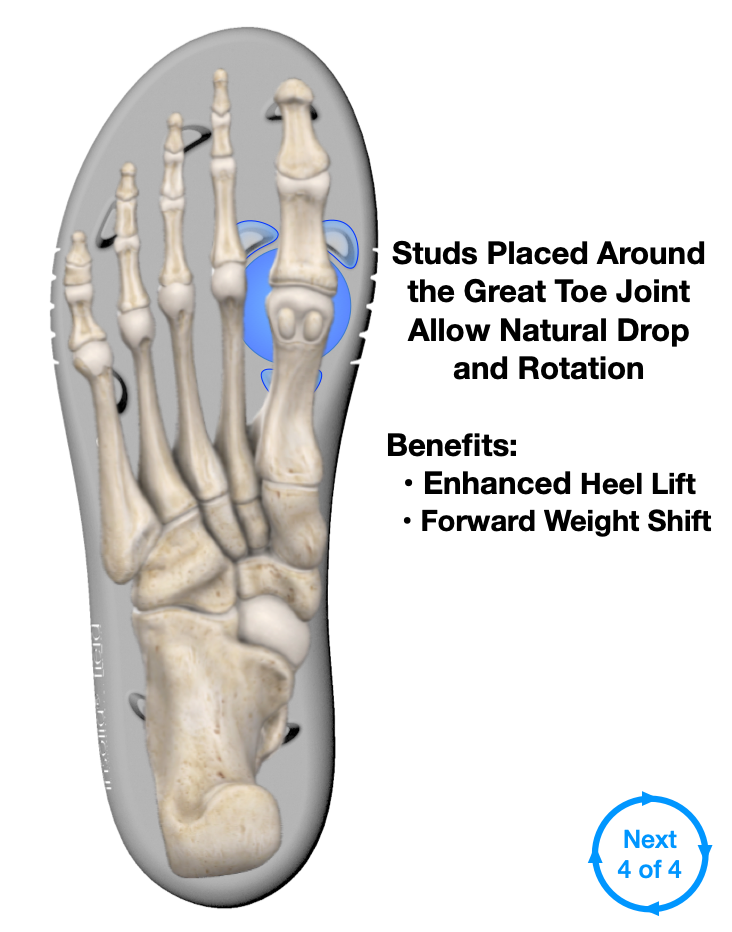
Insolia IMS Places Studs Around the Great Toe Joint, Not Under It
Great Toe Joint motion comes from the First Metatarsal, not the toe. For the joint to function, the head of the First Metatarsal must move downward and rotate inward.
A stud directly beneath that head restricts this motion, so the forefoot cannot reach the position from which it generates propulsion.
The FMZ clears that region. The First Metatarsal loads and releases against the ground rather than against the boot.
Traction is not traded away — linear traction is maintained across the array.


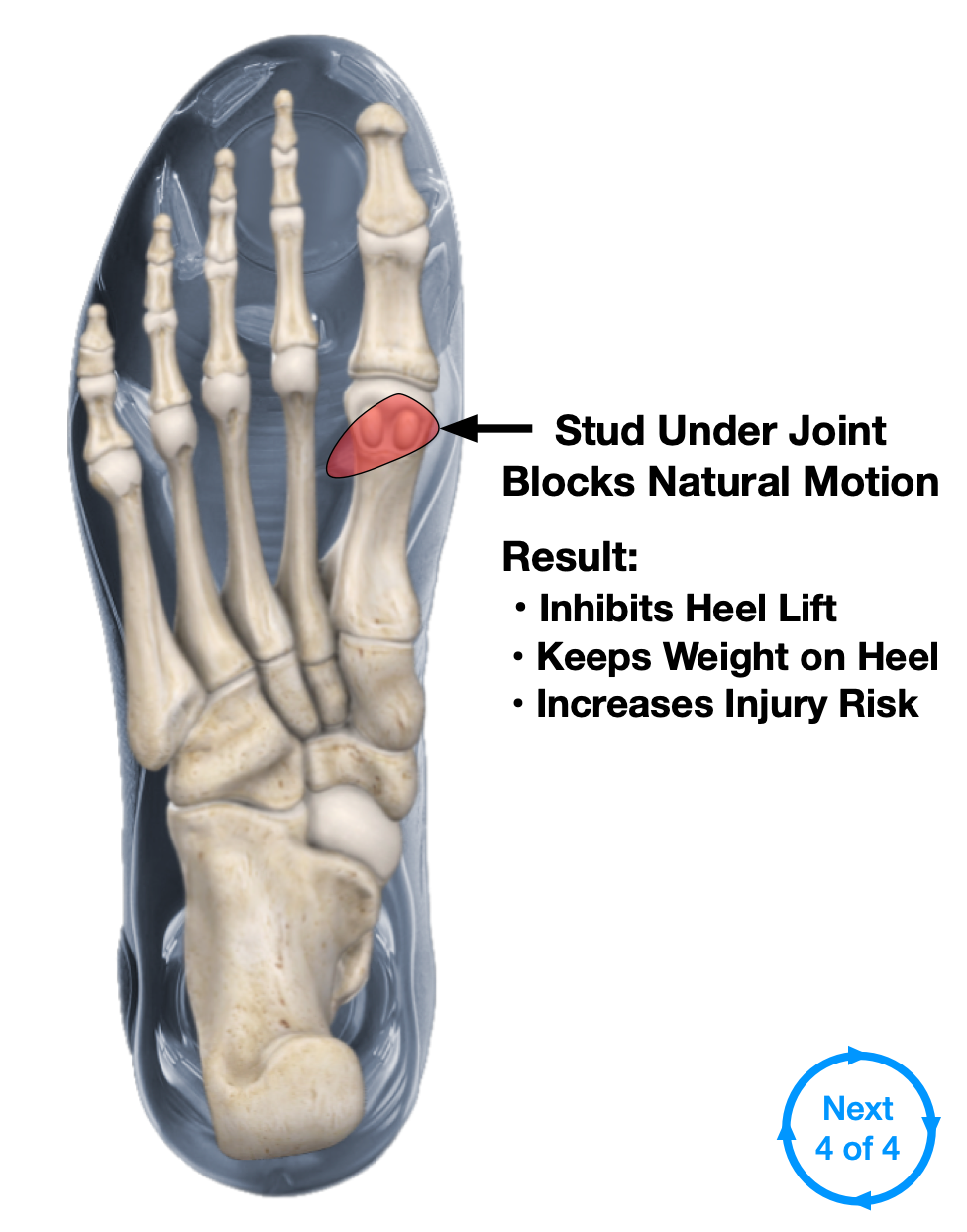
Critical Difference: Stud Placement Relative to the Great Toe Joint
Many cleats place studs under the Great Toe Joint, restricting flexibility. This restriction disrupts coordination throughout the foot and inhibits safe deceleration mechanics.
A restricted joint delays ankle plantarflexion and, with it, heel lift and forward weight shift during deceleration, when it’s needed most.
Insolia IMS places three studs around the Great Toe Joint to preserve natural motion.
3) Insolia Zone Of Flexibility™ (ZOF)
The Outsole Bends Where the Foot Bends
The Zone of Flexibility is Molded into the Top of the Outsole
A 3-4 cm compliant band connects the rigid forefoot to the rigid midfoot and heel, positioned to bend at the wearer's Great Toe Joint and sized to cover the natural variation around the population average.
The bottom surface stays smooth, so the flexibility costs nothing in rotational resistance.
The interior geometry is a bounded hinge: compliant through the joint's 65° functional range, resistant beyond it, so the joint is neither locked nor allowed to hyperextend.
Includes a concave dome under the Great Toe Joint (see Innovation 4).
Acceleration: Bending at the Joint
Propulsion requires the outsole to bend at the Great Toe Joint. A plate that resists there, or that hinges somewhere other than the joint, forces the athlete to deform the boot before driving the ground.
That deformation is work the athlete performs and does not get back.
The ZOF places the hinge at the joint so the bending force goes into propulsion rather than into the plate.
Deceleration: Shifting Load to the Forefoot
Enhances natural bending during deceleration, producing a period in which forefoot loading exceeds heel loading.
Boden identifies this as the protective position — reached through the boot's mechanics rather than the athlete's compensation.
4) Insolia Pressure Relief Dome™ (PRD)
Decoupling Peak Pressure from the Joint
A concave dome molded into the top of the outsole creates an Air Gap beneath the head of the First Metatarsal.
The Air Gap decouples the outsole's peak contact pressure from the underside of the joint. Without it, upward pressure at the point of highest load presses the joint closed — the condition FMZ and ZOF exist to prevent.
The joint therefore stays free to rotate during the most aggressive cutting and planting, when loads are highest and the margin for restriction is smallest.
The matching dome on the outsole's underside carries that load through the structure rather than into the foot, maintaining outsole strength at the critical point while leaving room for the Air Gap above.

Insole Innovations

5) Insolia Flex® Technology in the Insole
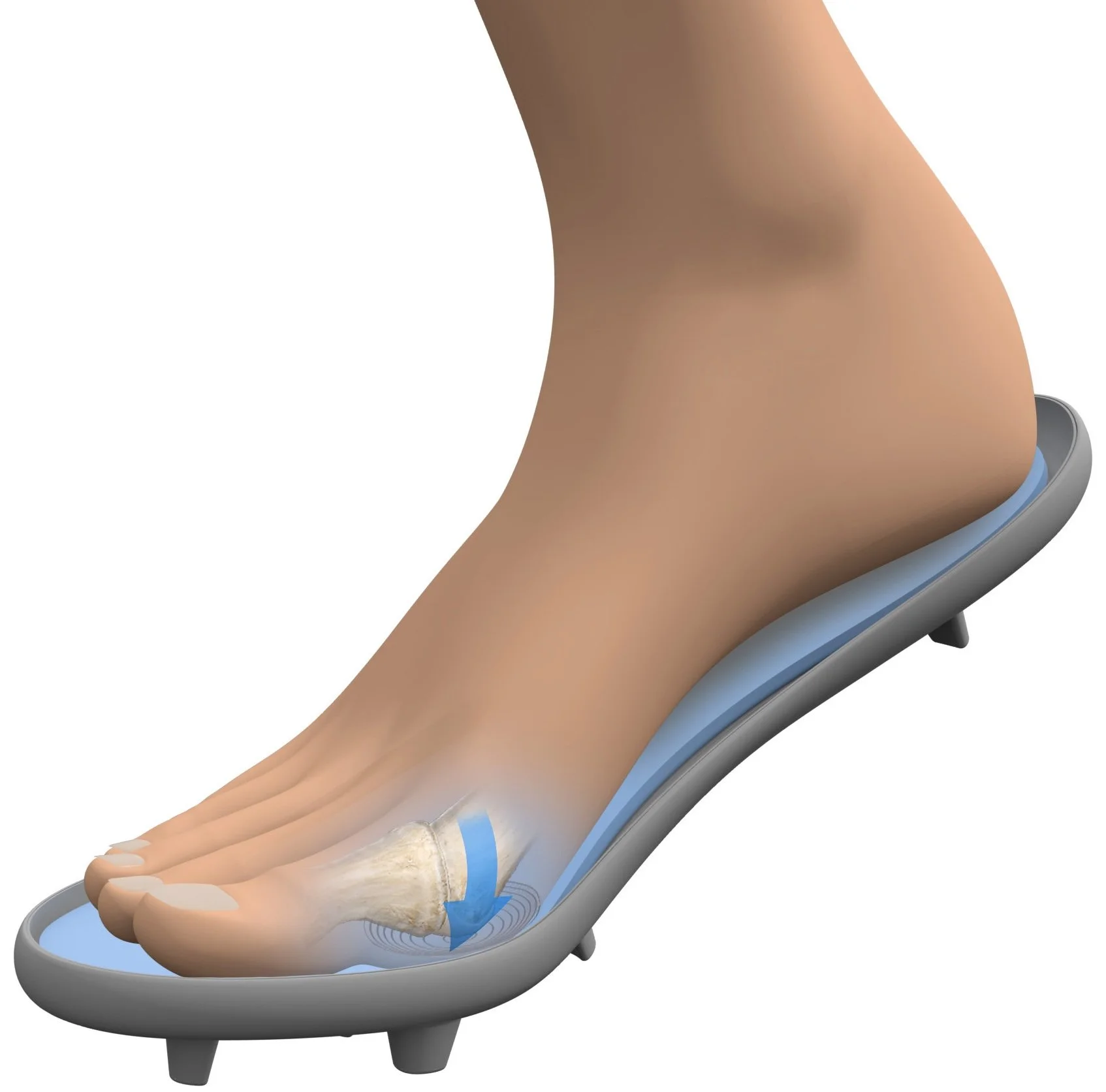
An Asymmetric Depression for an Asymmetric Motion
The Asymmetric Depression Under the Great Toe Joint
The head of the Great Toe Joint must drop and rotate inward together; a symmetric recess permits the drop but resists the rotation.
Clearing the outsole isn't enough on its own; an insole that supports the joint restores the restriction that the FMZ and PRD remove.
Insolia Flex completes the path: the joint is free through the full range the ZOF allows.
First MTP joint function measurably affects walking economy. In an independent, HBN-funded laboratory study, footwear containing Insolia Flex reduced VO₂/kg by approximately 10% compared with an identical blinded control, with forefoot comfort ratings 49.5% higher (Curran et al., The Foot and Ankle Online Journal 2011; 4(4):2 — n=15, treadmill walking protocol).
Whether that effect scales to athletic movement in cleated footwear is the first item in our proposed joint research scope.
6) Insolia Cradle® Technology in the Insole
An Asymmetric Heel Seat for an Asymmetric Heel Bone
Heel cups are symmetric. The calcaneus is not. Insolia Cradle matches the heel bone's bearing-surface geometry, so the heel seats in a defined position rather than settling into a generic cup.
A heel that is located, not approximated, gives the athlete a consistent platform from which to load, plant, and push off.
The extended medial wall locates the calcaneus during lateral loading. This is designed to work with Insolia Flex: a first MTP joint that cannot dorsiflex correctly tends to push the foot into lateral roll, so freeing the joint and seating the heel address the same problem from opposite ends.
Reduces strain on the plantar fascia.

Insolia Sports Technology
One Mechanism, Two Returns
Restoring Great Toe Joint motion does two things at once:
It returns work to the athlete, and it removes load from the structures that fail.
Performance
23% less torque to rotate the boot, with linear traction unchanged
Less bending force absorbed by the plate during propulsion, so more of the athlete's effort reaches the ground
Forefoot loading exceeds heel loading during deceleration, putting the athlete in position through the boot's mechanics rather than through compensation
Durability
ACL injury is associated with rearward weight distribution at deceleration and landing
Achilles injury is associated with restricted ankle plantarflexion under load
Lateral ankle sprain is associated with lateral roll when the Great Toe Joint cannot dorsiflex correctly
Turf toe is a forced hyperextension injury of the Great Toe Joint, which the ZOF's bounded hinge is designed to limit
Why both follow from one change
A joint that cannot move at the right time and through the right range forces the body to compensate. Compensation costs energy and redistributes load. Removing the restriction addresses both consequences from the same mechanism.
A platform, not a product
IMS is an outsole-and-insole architecture. It is independent of upper construction, last geometry, and midsole material, and integrates with a manufacturer's existing platform rather than replacing it.
Next application
The same architecture applies to court sports — basketball, tennis, pickleball — where cutting, planting, and deceleration place comparable demands on Great Toe Joint function. Adaptation is in development. The court application has not yet been tested, and validating it is part of the research scope we would propose to a development partner.
Insolia IMS
Built on Decades of Innovation
HBN Shoe was founded to solve
Footwear’s Most Challenging Comfort Problem
High Heeled Shoes
Over 60 million pairs of footwear with Insolia Technologies have been sold globally, delivering measurable improvements in comfort, walking efficiency, and body health.
Learn more about our Fashion & Comfort innovations.